High Angle Conveyor Belt for Cement Plant Clinker | Kunwei
High Angle Conveyor Belt for Cement Plant Clinker
Solving Heat Deformation: High Angle Conveyor Belt for Cement Plant Clinker Handling
In the abrasive and high-temperature environment of a cement facility, selecting the right high angle conveyor belt for cement plant clinker is critical to preventing costly production halts. Standard sidewall belts often suffer from severe cover cracking and cleat delamination when exposed to clinker temperatures that consistently exceed 100°C. This heat-induced deformation not only shortens the belt’s lifespan but also leads to material fallback and increased maintenance labor. At Kunwei Machine, we provide engineered solutions using specialized T2 and T3 heat-resistant compounds designed to maintain structural integrity under extreme thermal stress, ensuring a continuous vertical flow of hot clinker to your storage silos.
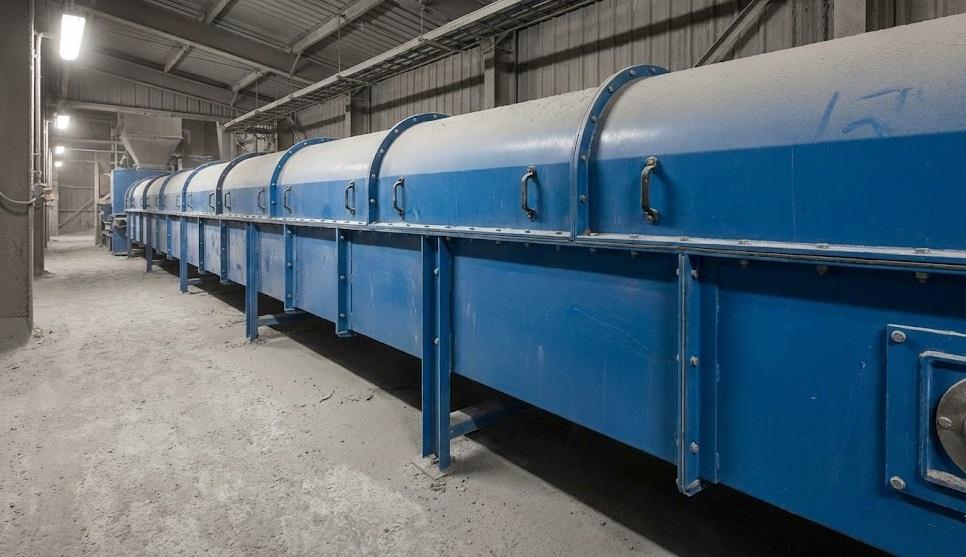
High Angle Conveyor Belt for Cement Plant Clinker
High-Temperature Vertical Lifting Scenarios
- Clinker Silo Feeding: Lift hot clinker directly from the cooler discharge to the top of storage bins at angles up to 90 degrees, saving over 60% of horizontal floor space compared to traditional troughs.
- Cement Mill Secondary Feed: Transport abrasive additives and hot clinker fragments between crushing stages in a compact, vertical footprint.
- Plant Retrofitting: Replace aging and noisy bucket elevators with a smooth-running high angle conveyor belt for cement plant clinker that reduces vibration and mechanical wear.
By utilizing our DJ Series sidewall technology, cement plants can achieve high-capacity vertical transport without the risks of chain breakage or the heavy maintenance requirements of metallic elevators. The “pocket” design ensures that even at steep inclinations, the hot clinker is cradled securely, preventing the abrasive “sandblasting” effect on the conveyor frame.
Technical Specifications for Heat-Resistant Sidewall Belts
| Specification Item | Cement Grade Configuration |
|---|---|
| Base Belt Width | 500mm – 1400mm |
| Rubber Compound Grade | T2 (up to 125°C) or T3 (up to 150°C) |
| Cleat & Sidewall Bonding | Integral Hot Vulcanization |
| Vertical Capacity | Up to 250 t/h (Heavy-Duty Load) |
The engineering logic behind our high angle conveyor belt for cement plant clinker relies on the XE-type cross-rigid base belt. This reinforced structure provides the necessary lateral stiffness to prevent the belt from “bowing” under the combined weight of the clinker and the thermal expansion of the rubber.
Heat-Resistant Rubber Compounds (T2/T3) and Structural Durability
The primary cause of failure in clinker handling is the hardening and subsequent cracking of the rubber cover. To solve this, Kunwei utilizes advanced EPDM-based T2 and T3 heat-resistant compounds. These materials are specifically formulated to resist oxidation and embrittlement, maintaining their flexibility even after prolonged exposure to clinker temperatures of 120°C to 150°C. Furthermore, our integral hot vulcanization process molecularly bonds the sidewalls and cleats to the base belt. In a cement plant, cold-bonded components will delaminate within weeks due to the thermal expansion cycles; our hot-vulcanized system ensures the “pockets” remain intact for years.
Optimized Customization for Abrasive Environments
- Reinforced S-Type Sidewalls: Increased thickness to resist the abrasive cutting action of sharp clinker fragments.
- Automatic Cleat Cleaning Systems: Non-powered rotary brushes to remove clinker dust from pockets, preventing material carry-back.
- Heavy-Duty Impact Beds: Installed at loading points to protect the heat-softened belt from the kinetic energy of falling clinker.
Expert Verification: Auditing Your Clinker Conveyor
Quality Check: How to Verify Heat Resistance Performance
A leading cement group in China improved its clinker line uptime by 30% after switching to Kunwei T3-grade belts. To ensure your high angle conveyor belt for cement plant clinker is truly heat-grade, use this checklist:
- Verify Rubber Grade: Ask for a formal test report confirming the rubber is T2 or T3 grade. Standard “heat-resistant” labels are often insufficient for the 120°C+ conditions of clinker discharge.
- Check for “Hardness Spike”: After 48 hours of operation, the belt surface should not feel brittle or show signs of “glazing.” If it does, the compound is under-specified for the thermal load.
- Test Sidewall Bonding: Inspect the base of the sidewall for any micro-gaps. Only hot-vulcanized bonds can survive the thermal expansion cycles without peeling.
Looking for a durable high angle conveyor belt for cement plant clinker? Explore our full range of Belt Conveyor Solutions or contact our engineers for a custom heat-resistance analysis.