TD75 Belt Conveyor
TD75 Belt Conveyor: The Gold Standard for General-Purpose Bulk Conveying Is high operational cost eating into your material handling budget? Do you need a reliable system for moving 1,000+ t/h of coal or ore without the complexity of specialized, hig
TD75 Belt Conveyor: The Gold Standard for General-Purpose Bulk Conveying
Is high operational cost eating into your material handling budget? Do you need a reliable system for moving 1,000+ t/h of coal or ore without the complexity of specialized, high-maintenance machinery?
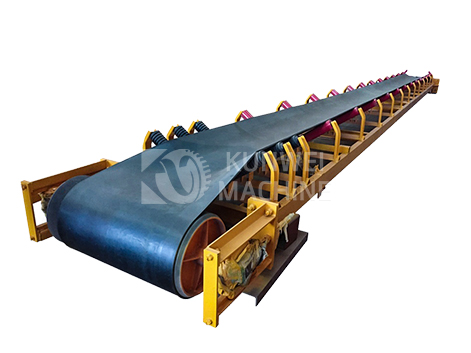
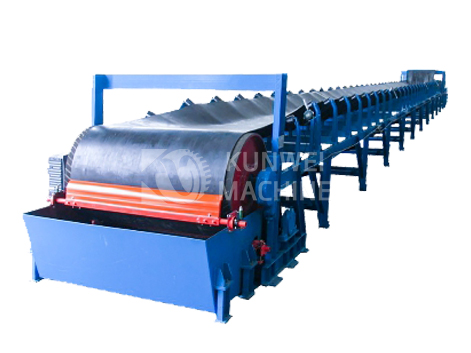
The TD75 Belt Conveyor stands as the industry standard for general-purpose, fixed bulk conveying. Unlike proprietary systems that lock you into expensive spare parts, the TD75 utilizes a proven, universal design used globally for decades in harsh mining, metallurgy, and port environments. It balances high handling capacity with low lifecycle costs, making it the rational choice for permanent production lines.
Why TD75 Belt Conveyor Remains the Industry Choice
While newer models exist, the TD75 remains the preferred choice for cost-conscious engineers and procurement managers. Its primary
advantage lies in structural universality.
Universal Parts Availability: The frame, idlers, and pulleys follow standard metric dimensions. You can source replacement rollers or belts from multiple suppliers, preventing supply chain vendor lock-in.
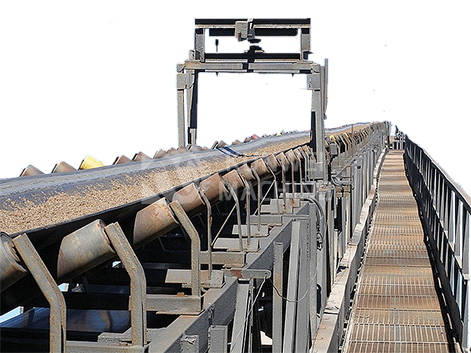
Simplified Maintenance: The open structure allows immediate access to idlers and belt cleaners. Maintenance teams can replace a failed trough idler in minutes during short shutdown windows, a critical factor for 24/7 power plant or cement operations.
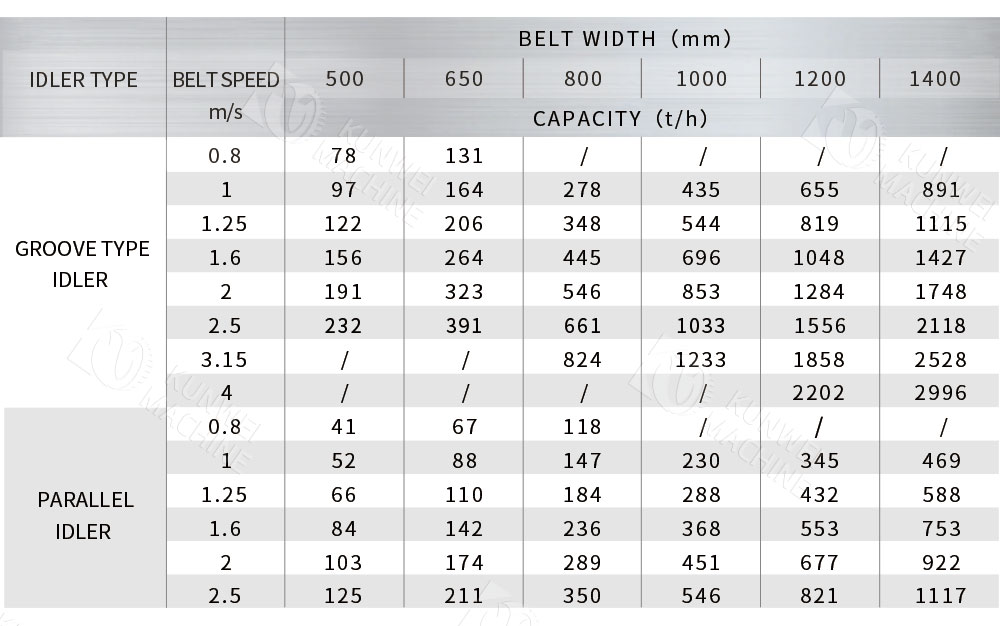
Scalable Capacity: From narrow 500mm belts for small aggregate plants to 1400mm belts for major ports, the TD75 scales to meet throughput demands up to nearly 3000 t/h.
Technical Specifications Overview
Typical capacity values based on industry-standard TD75 configurations. Actual throughput depends on belt speed, material density, and trough angle.
| Specification | Range / Data |
| Belt Width (mm) | 500, 650, 800, 1000, 1200, 1400 |
| Belt Speed (m/s) | 0.8 – 4.0 m/s |
| Conveying Capacity | 78 – 2990 t/h (Depending on material & speed) |
| Drive Power | 1.5 kW – 185 kW |
| Belt Types | Canvas (CC), Nylon (NN), Polyester (EP), Steel Cord (ST) |
Optimized Scenarios: Where TD75 Excels
The TD75 Belt Conveyor is not a “one-size-fits-all” solution. It performs optimally under specific engineering conditions. Understanding these boundaries ensures you select the right equipment for your site.
Material Suitability: Optimized for loose bulk materials with a bulk density of < 2.5 t/m³.
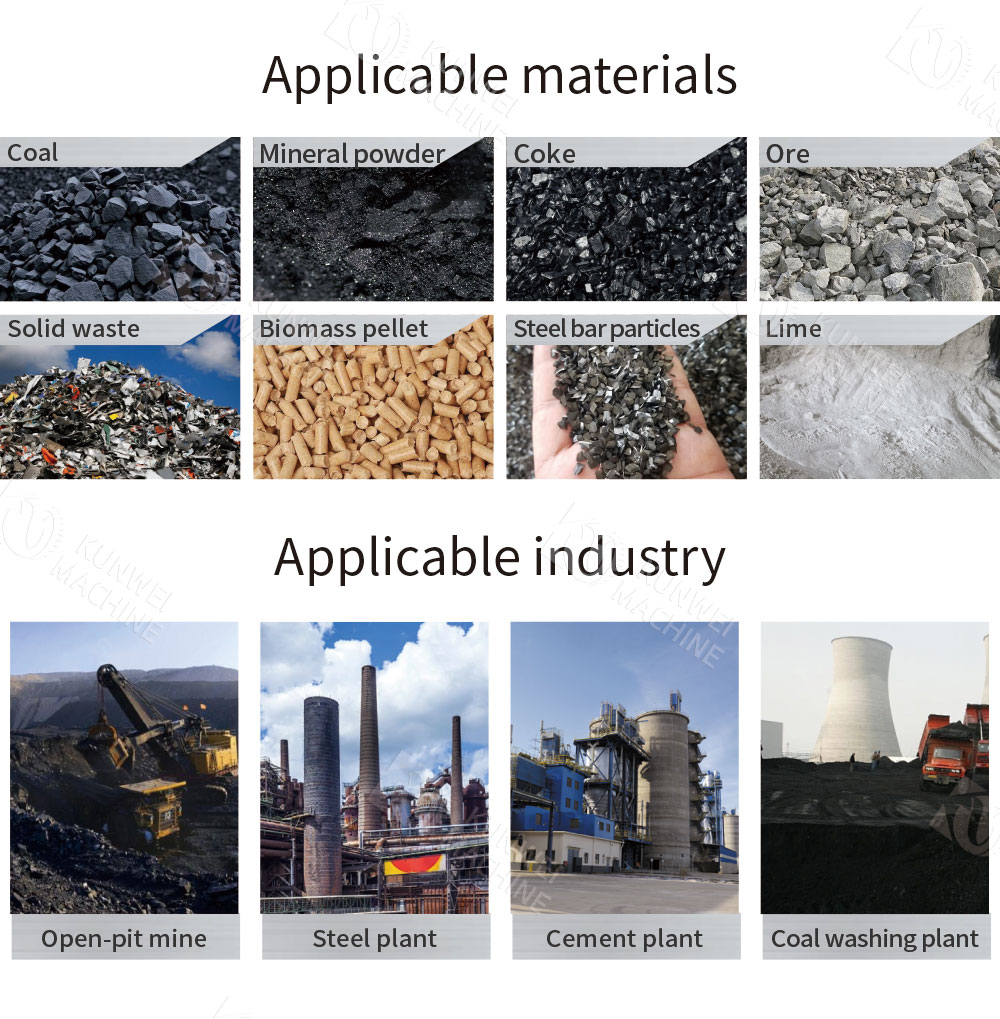
Ideal for: Coal, coke, sand, gravel, cement clinker, fertilizer, and wood chips.
Note: For extremely large, sharp, primary-crushed rocks (density > 2.5 t/m³), heavy-duty impact beds are required.
Working Environment: Standard configuration operates reliably between -10℃ and +40℃.
Cold Climate Note: For regions below -20℃, we specify cold-resistant belts and low-temperature grease for idler bearings to prevent startup torque issues.
Inclination Limits: The TD75 handles horizontal and inclined transport. However, physics dictates the maximum angle to prevent material rollback.
Coal/Grain: Max inclination ≈ 18°
Ore/Rock: Max inclination ≈ 16°
Engineering Insight: If your site layout requires an angle steeper than 20°, a Sidewall Belt Conveyor is the better engineering choice to prevent spillage.
TD75 vs. Other Conveyors: Understanding Trade-offs
Selecting a conveyor is about balancing cost, flexibility, and environmental control.
TD75 vs. Mobile Belt Conveyors
Mobile conveyors offer flexibility for temporary sites but lack capacity. The TD75 Belt Conveyor is a fixed belt conveyor designed for permanent, high-volume lines. If you move material along the same path every day (e.g., from crusher to stockpile), the TD75 offers a significantly lower cost-per-ton than deploying multiple mobile units.
TD75 vs. Pipe or Screw Conveyors
Pipe and Screw conveyors provide full enclosure, ideal for toxic or extremely dusty materials. However, they consume more power and have higher wear rates. The TD75 Belt Conveyor is an open system. It is cheaper to install and run, but if you handle dusty material like dry cement powder in a windy port, you must configure it with dust covers (rain hoods) and a dust extraction system at the transfer points to meet environmental regulations.
Critical Quality Checkpoints: How to Verify Your Purchase
Not all TD75 conveyors are manufactured equally. When auditing suppliers or inspecting deliverables, verify these specific components to ensure longevity.
-
Verify Belt Tensile Strength: Check the belt data sheet. For a “Heavy Duty Industrial Conveyor,” ensure the belt spec (e.g., EP200) matches your calculated tension requirements.
Verification: Look for the manufacturer stamp on the belt surface (e.g., “EP200/2 4+2”). “EP” indicates Polyester/Nylon core, which resists stretching better than standard Cotton (CC) belts.
-
Inspect Idler Sealing: The idler bearing is the first component to fail in dusty environments.
Verification: Ask for a cross-section drawing of the roller. A high-quality idler must use a labyrinth seal (non-contact) rather than a simple felt seal. The labyrinth path physically prevents coal dust from migrating into the grease, extending bearing life significantly.
Trust & Safety Compliance
Compliance with safety standards is non-negotiable for mining and industrial equipment.
- Standard Compliance: Our manufacturing process aligns with ISO and DIN standards for general-purpose conveying machinery.
- Hazardous Environments: For coal power plants or grain silos where dust explosion risks exist, the standard TD75 configuration is insufficient. You must specify:
Explosion-Proof Motors: Rated for specific hazardous zones.
Flame-Retardant/Anti-Static Belts: Essential to prevent static discharge from igniting airborne dust.
Conclusion & Next Steps
The TD75 Belt Conveyor remains the rational choice for facilities prioritizing cost-effectiveness, ease of maintenance, and high reliability. It eliminates the complexity of proprietary systems, offering a straightforward solution for moving bulk materials efficiently.
Ready to configure your line?
Don’t rely on guesswork for belt width and power calculations. Our engineering team uses standard industry formulas to optimize your drive unit and belt selection.
[Request a TD75 Drawing & Quote] or [Consult our Engineers for Belt Width Calculation]